
Opinion

An undergraduate degree is either a bachelor’s degree or an associate’s degree that students get after high school. Learn the difference between undergraduate and graduate and postgraduate degrees, and how to apply for them.
Undergraduate students are typically those working to earn a bachelor’s degree (or, less commonly, an associate’s degree). These degrees are often referred to with the general term undergraduate degree. Outside of the US, an undergraduate degree is sometimes called a first degree.
Explore the key differences between undergraduate and graduate programs, including goals, entry requirements, coursework, and career opportunities. Find the right educational path for your future.
In an undergraduate program, you’ll earn a bachelor’s degree, usually requiring four years to complete. A bachelor’s degree broadens your academic exposure across various subjects.
When people refer to an undergraduate degree, they typically mean a bachelor’s degree. This is the most common type of undergraduate degree, requiring four years of education at a college or university. Undergraduate degrees provide foundational knowledge and academic skills.
Undergraduate education is education conducted after secondary education and before postgraduate education. It typically includes all postsecondary programs up to the level of a bachelor's degree.
An undergraduate degree, often called a bachelor's degree (most commonly), marks the initial stage of higher education. It typically takes place at a college or university, and those pursuing it are known as undergraduate students.
An undergraduate degree is the first level of higher education that students pursue after high school. The two main types are Associate degrees (2 years) and Bachelor's degrees (3-5 years).
A bachelor’s degree, also known as an undergraduate degree, is typically a four-year, 120-credit-hour degree where you take general and specific classes to gain knowledge and skills for your selected major.
What is an Undergraduate Degree? An undergraduate degree is a 2-year associate's degree obtained at a college, community college, or vocational/technical school, or a bachelor's degree typically awarded through a four-year college program.
What is an undergraduate vs. graduate degree? Undergraduate degrees provide a foundational education within your field of study while allowing you to build on your knowledge of general subjects outside your major. As an undergraduate student, you’ll often get the chance to build a community of people from different backgrounds while pursuing your educational goals. Graduate degrees, however
A master's degree is one type of graduate degree, which is any degree pursued after receiving an undergraduate bachelor’s degree. A master’s degree provides specialized education in a particular subject. The other type of graduate degree is a doctoral degree, which focuses heavily on original research and advanced knowledge of a particular
UK Graduate Route 2026: who qualifies, how long it lasts, what you can do, and the critical 2027 deadline. Complete guide by Moving to the UK.
The Trump administration’s plan to redefine what constitutes a professional degree would exclude nursing and limit access to student loans — outraging national health care groups and leaving
Changes to graduate loan offerings and borrowing limits, income-driven repayment plans and Parent Plus loans go into effect on July 1, 2026.
Learn about what an undergraduate degree is with a comparison of undergraduate versus graduate programs and steps for how to earn an undergraduate degree.
Stay updated on major changes to federal student aid, including borrowing and repayment, under the One Big Beautiful Bill Act.
A professional student may not receive Title IV aid as an undergraduate student for the same period of enrollment. A Direct PLUS Loan is commonly referred to as a grad PLUS loan when made to a graduate or professional student. Do you qualify for the limited exception and want to apply? Use the online application to apply for a grad PLUS loan.
President Donald Trump's massive tax and spending package will set new limits on how much money students can borrow for college and graduate school.
Your year in school Dependency status If you’re an undergraduate or graduate student The type of federal loan you receive For the 2026-27 school year, most undergraduate borrowing limits remain unchanged, while graduate and parent PLUS loans are being updated under new federal rules.
An undergraduate degree is either a bachelor’s degree or an associate’s degree that students get after high school. Learn the difference between undergraduate and graduate and postgraduate degrees, and how to apply for them.
Undergraduate students are typically those working to earn a bachelor’s degree (or, less commonly, an associate’s degree). These degrees are often referred to with the general term undergraduate degree. Outside of the US, an undergraduate degree is sometimes called a first degree.
Explore the key differences between undergraduate and graduate programs, including goals, entry requirements, coursework, and career opportunities. Find the right educational path for your future.
In an undergraduate program, you’ll earn a bachelor’s degree, usually requiring four years to complete. A bachelor’s degree broadens your academic exposure across various subjects.
An undergraduate degree, often called a bachelor's degree (most commonly), marks the initial stage of higher education. It typically takes place at a college or university, and those pursuing it are known as undergraduate students.
Undergraduate education is education conducted after secondary education and before postgraduate education. It typically includes all postsecondary programs up to the level of a bachelor's degree.
What is an Undergraduate Degree? An undergraduate degree is a 2-year associate's degree obtained at a college, community college, or vocational/technical school, or a bachelor's degree typically awarded through a four-year college program.
People who begin to study are undergraduates and people who are graduates were undergraduates but continue to study for something bigger.
Depending on the chosen course, of medicine, six years to complete. In the United States, undergraduate education refers to a student who is studying for a bachelor's degree
An undergraduate is a person who’s on the path to earning a bachelor’s degree, which typically takes four years to complete. When people use the phrase “college degree,” they’re usually referring to an undergraduate degree.
An undergraduate degree marks the first step on your higher education path. It describes two kinds of degrees: associate and bachelor’s degrees.
An undergraduate is a college or university student who's not a graduate student. After high school, you can become an undergraduate.
This website is not offered in your region. Please close your web browser
An undergraduate student in the United States is seeking one of two higher education degrees—an associate degree or a bachelor’s degree.
Two-year programs: A two-year undergraduate program is commonly known as an associate degree. It can help you prepare for an entry-level role or enter a more specific field of study at a four-year college or university. The two most common associate degrees are an Associate of Arts and an Associate of Science.
By the end of this article, you’ll have an advanced degree in all the different ways graduate, grad, undergraduate, and undergrad are used, and what they mean in each case. An undergraduate is “a student in a university or college who has not received a first, especially a bachelor’s, degree.” For example, a college student might say I’m an undergraduate at the University of Texas if they were pursuing a bachelor’s degree there.
An undergraduate is a student studying to earn a bachelor’s or associate’s degree.
Undergraduate degrees provide foundational knowledge and academic skills. Students learn advanced literacy, critical thinking and analytical skills. These general education frameworks can then be applied to more specific studies. When people refer to a graduate degree, they typically mean a master’s degree. A master’s degree is
Also known as a bachelor's degree, an undergraduate degree is a credential you receive when you complete a course of study at a college or university. Earning an undergraduate degree can qualify you for jobs in a wide range of industries.
ScholarshipOwl is here to clear this up for you – read on! After students finish high school, they get an undergraduate degree. An undergraduate degree refers to either a bachelor’s degree or an associate’s degree.
An undergraduate degree is usually the first step you take in pursuing a college education. Find out more about how to start or finish your degree online through ODUGlobal.
Undergraduate studies typically combine lectures, discussions, and practical assignments, focusing on broad knowledge acquisition. Graduate programs typically emphasize specialized, in-depth learning, often with a greater focus on independent research, seminars, and theoretical application. Undergrad coursework covers a wide range of subjects within a discipline, aiming to provide a comprehensive overview of the field. Graduate coursework is more focused and advanced.
An undergraduate program is a two- or four-year program that individuals study at a community college, vocational school, college or university after successful completion of high school or the equivalent.
UNDERGRADUATE meaning: 1. a student who is studying for their first degree at a college or university 2. a student who is. Learn more.
This makes it especially essential a university. An undergraduate degree is typically the initial degree pursued by students after high school or after some professional experience
A bachelor's degree (from Medieval Latin baccalaureus; or baccalaureate, from Modern Latin baccalaureatus) is an undergraduate degree awarded by higher education institutions upon completion of a course of study lasting three to six years (depending
In this detailed guide, we’ll undergraduate program for your goals. An undergraduate degree is the first level of higher education you pursue after high school

what is under graduate

Naveed Jamali
By

Newsweek editor at large

See more of our trusted coverage when you search.to see more of our trusted coverage when you search.

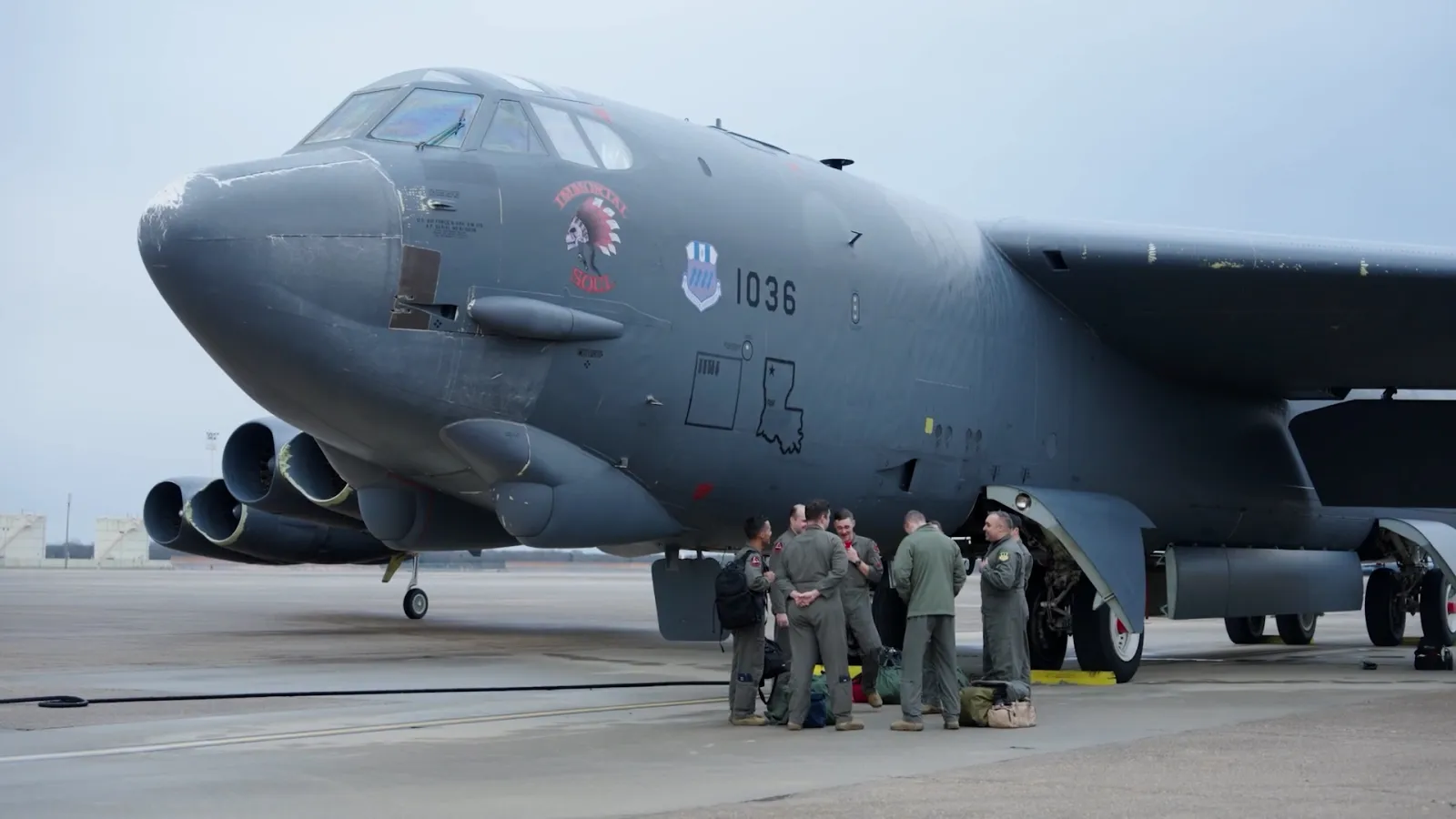
The B-52 is one of the most iconic symbols of America's military might. The massive eight-engine bomber has been the symbol of American strategic air power from the Cold War to present and has been connected to every major American military engagement since it first saw combat in the Vietnam War.

But has this still-formidable aircraft changed since first taking flight seven decades ago? Yes and no. Getting the answer would require me to understand what the B-52 truly is and what it is like to fly in one.

For years I worked undercover against Russian military intelligence, something most thought had ended with the collapse of the Soviet Union. But national security threats live on, and that's an integral part of why the B-52 remains as relevant as ever.

It's a rare chance for a journalist like me to ride along on a B-52 training mission, but it's just the kind of opportunity that I signed up for in hosting Newsweek's Unconventional series.
Unconventional, host, Newsweek, with, B-52, bomber
...

The preparations for the flight were pretty intense, considering how physically demanding it is simply to be a passenger in this warplane. Just flying along takes specialized training. For someone used to flying commercially, the possibility of being ejected from an aircraft is a terrifying prospect. But here, it's something we need to prepare for.

The B-52 has two levels. The top is for the pilots and electronic warfare officers, the bottom is for the weapons systems officers. In case of an emergency, the top crew are ejected upwards, just like on a fighter jet. The crew down below get ejected downwards. I have to train for both positions.

Located outside of Shreveport, Louisiana, Barksdale Air Force Base has existed nearly as long as bombing itself. It's where some of the very first military bombers flew a century ago. Named in honor of Second Lieutenant Eugene Barksdale – a World War One flyer and test pilot – Barksdale is now one of the most vital locations for the U.S. military's deterrent force. A show of power designed to end a battle – or a war – before it begins.

Once the B-52 is designated for a flight, the crew boards, gets ready, and then a ballet of people – including both civilian and military air-traffic controllers – work to get it off the ground. The takeoff roll is both long and graceful. I watch as the pilots gently muscle the giant bomber into the air. And then, we're flying.

For such a large jet, the quarters of a B-52 are confined. At the top, pilots operate out of the cockpit, while the electronic warfare officers occupy a classified space that we couldn't show on film. Down a skinny ladder is the spot for the weapons system officer, or "wizzo."

With extensive training, the wizzo is responsible for all the weapons on the aircraft, both in training and in combat. Simulating a combat scenario, right down to pushing the launch button, is how B-52 crews build muscle memory for the real thing.

Such training also helps to prepare for the unexpected, as occurred during my own ride-a-along. Out of nowhere, there's a malfunction. The temperature in the cabin spikes. Metal surfaces become hot to the touch. It's about as physically uncomfortable as I've ever been. As the crew works to find a solution, people and equipment are overheating. Even the cameras can't handle the heat, and they stop working altogether. Despite the fault, the B-52 mission must go on. Our next objective is air-to-air refueling.

This means a rendezvous with a KC135 tanker. It's one of those moments where tensions run high inside the aircraft. Since this is a critical phase of flight, we put on our oxygen masks.

The jets take part in a delicate dance. As the B-52 takes on fuel at a rate of 7,000 lbs per minute, it gets heavier and pilots must add power. As the tanker gets lighter, they have to reduce power. While seemingly routine, it's actually one of the most dangerous parts of the job. In a plane that burns 3,300 gallons of fuel an hour, however, refueling is vital to the mission.

And then, after nearly seven hours on board, it's time to return, and we land safely at Barksdale, the yellow drag chute unfurling behind the B-52's giant tail. My 36 hours with the B-52 crews at Barksdale Air Force Base come to an end.

It might seem strange, the idea that young military members are serving a vital national security mission on a jet as old as their parents — and someday their grandparents.

Related Podcasts